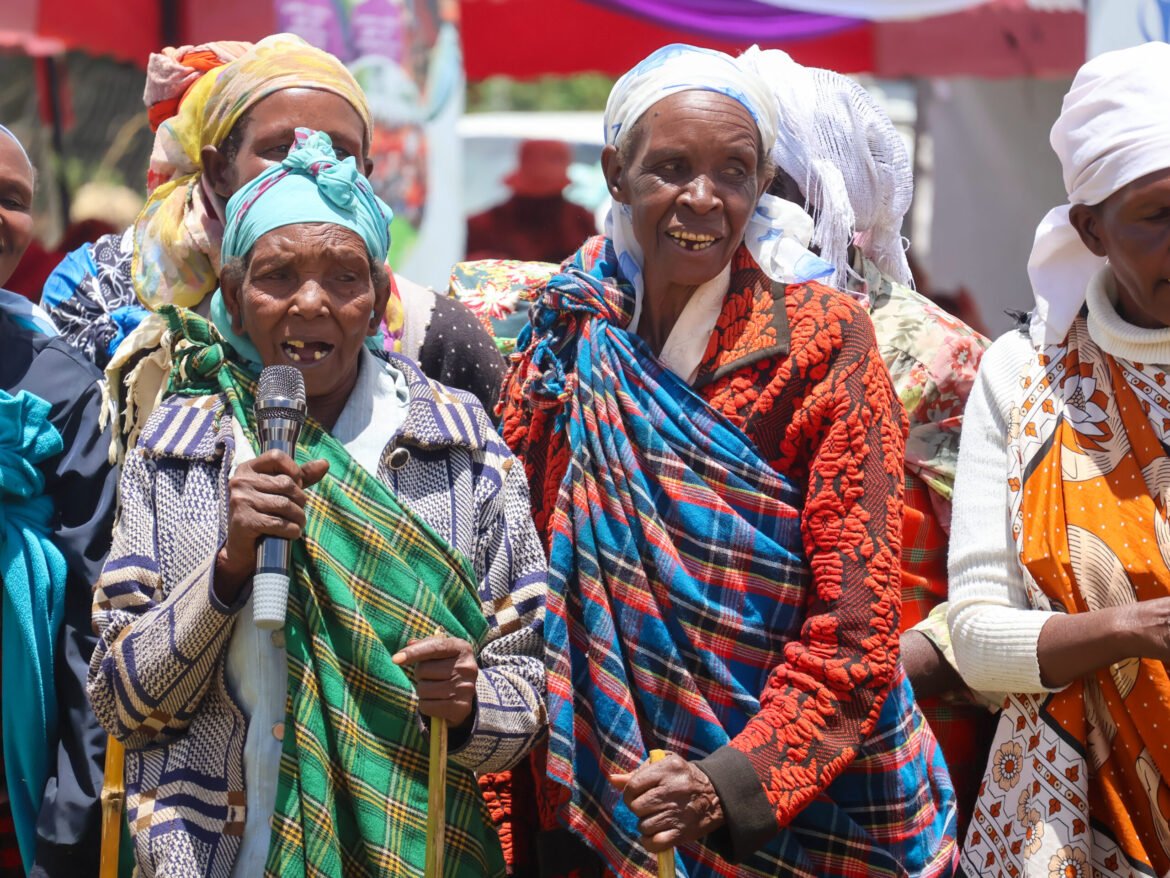
Women Community leaders during the commemoration of the International Women Day 2024
The World Day of Social Justice observed annually on February 20th, promotes efforts to tackle issues such as poverty, exclusion, and unemployment, aiming to create a more equitable society.
Communities began commemorating World Day of Social Justice to raise awareness about global inequalities and
promote fairness, inclusion, and equity efforts.
Established by the United Nations in 2007, the day encourages governments, organizations, and individuals to address issues like poverty, unemployment, gender inequality, and human rights violations.
Communities mark the occasion through events such as workshops, seminars, and campaigns, focusing on themes like access to education, fair labor practices, and social protection.
By fostering dialogue and action, the day serves as a reminder of the collective responsibility to build a more just and
equitable world.
In 2025, the theme is "Strengthening a Just Transition for a Sustainable Future," emphasizing the critical need to ensure equitable and inclusive transition to sustainable development.
This theme highlights the importance of implementing policies and practices that address environmental challenges and promote social justice, ensuring no community is left behind in pursuing a sustainable future.
The significance of this theme lies in its call to action for governments, organizations, and individuals to collaborate
in creating a future where economic growth and environmental sustainability go hand in hand with social equity.
It underscores the necessity of providing support and opportunities to marginalized communities, ensuring that all share the benefits of sustainable development.
By focusing on a just transition, we acknowledge that the path to sustainability must be paved with fairness, inclusivity, and respect for human rights, ultimately leading to a more harmonious and balanced world.
MIDRIFT HURINET has successfully implemented several interventions aimed at tackling poverty, particularly in the informal settlements of Nakuru County.
A standout among these is the Danish Emergency Relief Fund (DERF) program, which significantly mitigated the socio-economic impacts of the COVID-19 pandemic on vulnerable populations.
This program, which included:
1. Livelihood Support: Providing care packages to identified vulnerable households to alleviate immediate economic hardships.
2. Water, Sanitation, and Hygiene (WASH) Packages: These packages distribute essential items such as water tanks, handwashing soap, sanitizers, and face masks to improve health and reduce disease transmission.
3. Community Awareness: MIDRIFT HURINET has proactively conducted activities to raise awareness about infection prevention and available treatment options. This approach has been instrumental in empowering communities with vital health information, enhancing their resilience.
These efforts aim to enable individuals who have lost access to income and essential services to cope better with the
pandemic's effects.
Through the Reducing Insecurity and Violent Extremism (REINVENT) program, MIDRIFT HURINET addresses underlying
factors contributing to poverty, such as insecurity and lack of economic opportunities.
By enhancing community-police relations and supporting police reforms, MIDRIFT HURINET creates a safer environment conducive to economic activities and poverty reduction.
MIDRIFT HURINET's focus on mental health support for families impacted by violence indirectly contributes to poverty
alleviation.
The organization helps individuals regain stability by providing psychological assistance, enabling them to participate more effectively in economic activities.
Through these multifaceted interventions, MIDRIFT HURINET addresses the immediate needs and systemic challenges
associated with poverty, fostering community resilience and sustainable development.
This work is not just a response to a crisis but a beacon of hope for the community, inspiring a sense of possibility and a brighter future.
In the vibrant but often underserved areas of Nakuru County, exclusion casts a long shadow, affecting access to opportunities, services, and a sense of belonging.
MIDRIFT HURINET, with its unwavering commitment to human rights and social justice, has been a beacon of hope,
designing interventions that dismantle barriers and bridge divides.
This steadfast commitment instills confidence in the communities, assuring them that principles of fairness and
equality guide the organization's work.
At the heart of MIDRIFT HURINET's work is a deep-rooted belief in the transformative power of inclusion.
This belief guides the organization's initiatives and underscores its commitment to fostering a more just and equitable society.
It began by empowering marginalized voices—women, youth, and persons with disabilities—to ensure they were heard and actively shaped decisions that impacted their lives.
Another MIDRIFT HURINET's standout initiative is its commitment to inclusive governance.
By fostering partnerships between community leaders, law enforcement, and local administrations, the organization has created platforms where marginalized groups can advocate for their rights.
In spaces where these groups once felt invisible, their presence is now pivotal, redefining decision-making processes to reflect the rich diversity of the communities served.
MIDRIFT HURINET also uses innovative tools to tackle exclusion, such as leveraging radio and community forums to amplify voices that often go unheard.
The programs promote awareness about human rights, access to justice, and mental health, tailored to their audience's linguistic and cultural context.
This approach ensures that no one is left behind, even in the remotest corners of Nakuru.
The organization addresses exclusion's economic dimensions.
Initiatives providing livelihood support and financial literacy programs empower individuals to break free from poverty and marginalization.
These interventions are not just stopgaps but are designed to build resilience and equip communities to thrive independently.
MIDRIFT HURINET's approach to tackling exclusion is as bold as compassionate.
By championing inclusion through advocacy, education, and capacity-building, the organization redefines what it means to belong.
It reminds us all that a truly just society is one where everyone has a seat at the table and the means to contribute to the collective good.
Through its tireless efforts, MIDRIFT HURINET has turned exclusion from a silent struggle into a rallying cry for change, inspiring communities to embrace diversity and work together for a future where no one is left behind.
MIDRIFT HURINET also champions innovation and entrepreneurship.
Recognizing the untapped potential within informal settlements, MIDRIFT HURINET partners with local stakeholders to offer micro-financing and business mentorship programs, enabling small enterprises to grow and create employment opportunities.
These efforts generate income and empower individuals with renewed purpose and agency.
The interventions aren't just about creating jobs; they aim to build resilient communities where economic empowerment becomes the cornerstone of broader societal transformation.
With each skill imparted, a business launched, and a barrier broken, MIDRIFT HURINET demonstrates that unemployment, though a daunting challenge, is not insurmountable when met with innovation, collaboration, and a steadfast commitment to human dignity.
By:Jacob Karani